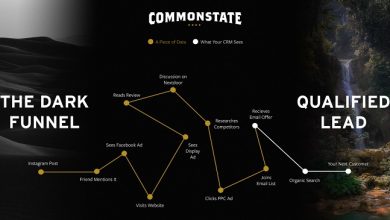

For the past decade, digital brand building has been dominated by the paid advertising treadmill. Marketing teams poured millions into paid social ads, pay-per-click search auctions, and sponsored influencer placements to guarantee immediate customer acquisition. While paid campaigns can generate rapid bursts of traffic, they carry an inherent structural flaw: the moment you turn off the ad spend, the traffic evaporates. As customer acquisition costs continue to climb across every major digital ad network, relying exclusively on paid channels has become an unsustainable margin squeeze.
Smart search engine optimization provides the ultimate counterbalance. Modern SEO is no longer about tricking web crawlers with keyword frequency or chasing superficial vanity metrics. When executed with strategic maturity, it operates as an enterprise-wide growth asset that captures consumer demand at the exact moment of commercial curiosity. Winning customers organically requires building digital authority, answering real problems with genuine expertise, and creating an online journey that bridges search curiosity with lasting brand loyalty.
The Pitfall of the Paid Acquisition Treadmill
The primary challenge facing direct-to-consumer and business-to-business brands alike is the volatility of digital ad ecosystems. Auction-based advertising platforms thrive on competition, driving up cost-per-click rates year after year while privacy updates continue to degrade precision targeting. Brands caught in this cycle find themselves running faster simply to stand still, paying higher tolls each quarter to reach the exact same prospects.
Organic search inverts this dynamic through compounding returns. Unlike a paid campaign where every visitor represents an incremental marginal cost, an authoritative, well-ranked piece of content incurs its primary expenditure upfront during research, production, and technical distribution. Once established in top organic positions, that asset works around the clock, harvesting prospective customers for months or even years without incurring additional media spend. Over time, this shifts a brand’s customer acquisition economics from an ongoing operating liability into an appreciating intellectual property asset.
Moving Beyond Keywords to True Search Intent
Traditional search marketing focused heavily on raw search volume. Marketers identified high-frequency search phrases and drafted superficial articles engineered solely to satisfy search engine algorithms. The resulting content often ranked briefly, only to bounce frustrated visitors who realized the page failed to answer their underlying question.
Today’s search algorithms are far more sophisticated, utilizing advanced natural language processing to evaluate context, semantic nuance, and user satisfaction signals. Winning the modern search landscape requires mastering search intent across three distinct psychological stages:
-
Informational Queries: Prospects seeking to diagnose an unresolved pain point or understand a conceptual framework. Winning here requires educational authority, objective analysis, and comprehensive breakdowns that solve the query without immediately shoving a hard sales pitch in the reader’s face.
-
Commercial Investigation: Shoppers evaluating competing solutions, comparing feature sets, or reading hands-on product reviews. Brands that openly compare their offerings with competitors and transparently explain ideal use cases earn immediate credibility.
-
Transactional Actions: Users who know exactly what they need and are hunting for the smoothest purchase path, clearest pricing tier, or immediate onboarding route. Here, technical speed, intuitive layouts, and frictionless conversion mechanics take center stage.
Aligning content with the precise psychological mindset behind a search prevents audience drop-off. When a searcher lands on a page that directly mirrors their thought process, trust is established in seconds.
Building Topical Authority Through Content Architecture
Search engines no longer evaluate web pages as isolated islands. Instead, algorithms assess whether a domain possesses deep, demonstrable subject matter expertise across an entire topic spectrum. Brands that publish disconnected, one-off articles on trending subjects struggle to maintain steady rankings against competitors that approach their niche systematically.
The most effective framework for establishing this credibility is the hub-and-spoke content architecture:
Comprehensive Pillar Assets
At the center of your architecture sits a comprehensive pillar asset—an exhaustive guide covering an umbrella topic from every fundamental angle. This central resource defines baseline terms, outlines core challenges, and introduces relevant operational strategies, acting as the definitive gateway for readers exploring that domain.
Contextual Cluster Content
Branching off from this central hub are specialized spoke pieces, each delving deep into a hyper-specific subtopic, tactical workflow, or niche scenario mentioned in the pillar page. By utilizing clean, deliberate internal linking between the central hub and its supporting spokes, you create an interconnected ecosystem.
This architecture signals to search engines that your brand does not merely touch upon a topic; it commands it. More importantly, it keeps human visitors navigating through your digital library, turning what began as a single search query into an extended exploratory session.
Technical Health as the Catalyst for Retention
Even the most insightful editorial content will fail if the underlying technical foundation of your website is brittle. Search engines actively penalize domains that provide poor user experiences, and modern web users abandon frustrating pages within three seconds.
High-impact SEO requires disciplined technical maintenance:
-
Speed and Performance Architecture: Compressing visual assets, minifying script execution, and utilizing modern content delivery networks ensure pages render instantly across mobile and desktop devices.
-
Mobile-First Responsiveness: Over half of all global organic search traffic originates from handheld devices. An intuitive mobile navigation system, thumb-friendly tap targets, and legible typography are essential for both search rankings and consumer conversions.
-
Crawling and Indexing Clarity: Maintaining pristine XML sitemaps, resolving broken redirects, and structuring clean schema markup allow search engine spiders to map and index your content without technical friction.
When a website loads instantaneously and functions smoothly, visitors focus entirely on the substance of your message. Technical efficiency transforms organic visits into active engagement.
Bridging the Gap from Organic Reader to Paying Customer
Attracting organic visitors to your site is only the first half of the equation; translating that audience into commercial revenue is where true marketing maturity shows. A common mistake brands make is treating organic blog readers like cold ad targets, abruptly hitting them with aggressive checkout pop-ups that interrupt the reading experience.
Organic conversion demands contextual nuance:
-
Embedded Micro-Conversions: Rather than pushing an immediate enterprise demo or high-ticket purchase, offer relevant mid-tier value. A downloadable template, an interactive planning tool, or a proprietary industry benchmark report gives readers a compelling reason to exchange contact details without feeling pressured.
-
Inline Product Integration: Naturally weave your product or service into case studies and real-world problem breakdowns. Demonstrate how your solution solves the specific technical or strategic friction discussed in the text, allowing the product’s utility to speak for itself.
-
Retargeting Qualified Audiences: Organic traffic provides a remarkably refined audience for secondary marketing efforts. Segmenting site visitors based on the specific content clusters they explored allows you to serve highly relevant, cost-effective paid reminders that reinforce the authority already built through organic search.
Sustainable brand growth is rarely achieved through short-term marketing shortcuts. The brands that dominate their industries over decades do so by becoming the most helpful, reliable, and visible voices in their market. By treating SEO not as a checklist of technical tricks, but as a deliberate commitment to understanding customer needs and delivering exceptional answers, you build a self-sustaining discovery engine that powers revenue for years to come.